HILL REVEALS FUTURE PLANS AFTER RECORD FOURTH WORLD CHAMPIONSHIP WIN
It’s late in the night, or rather very early in the morning, when Cory Hill sits down in Durban to reflect on his ICF World Championships victory with The Paddler.
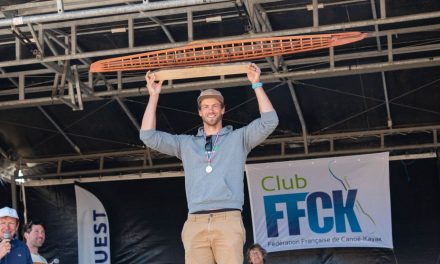
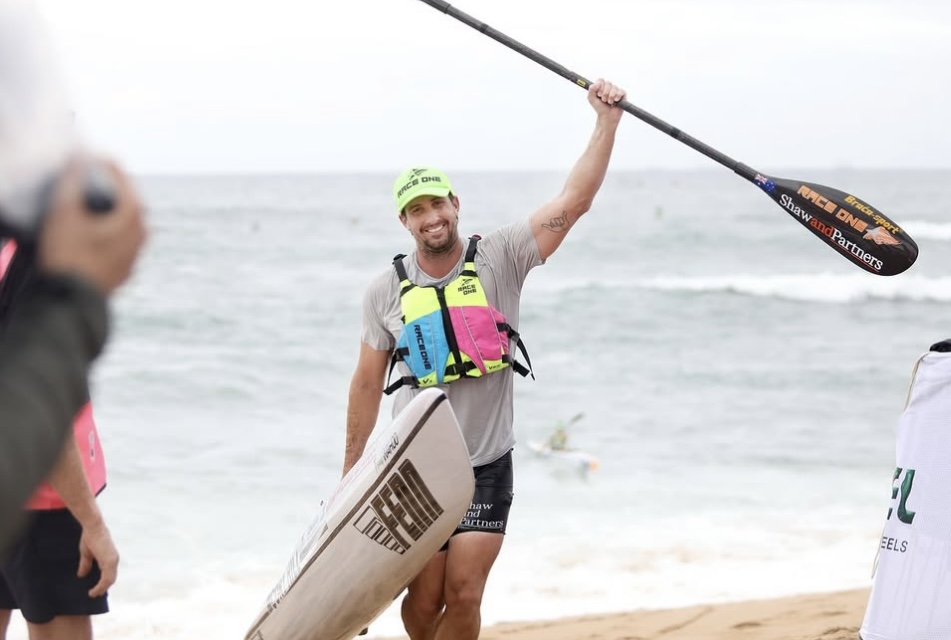
Hours earlier, the Australian added another record to his already record-breaking surfski career, claiming his fourth victory at the showpiece event.
Only three other paddlers – Sean Rice, Jemma Smith and now Kira Bester – have been able to win two titles. No one else has picked up three.

For other athletes, in other sports, with other personalities, the pursuit of history like this is what keeps them coming back.
But Hill, now aged 36, isn’t driven by history. His outlook is like his nickname, ‘Chill’.
His pursuit of success comes from a passion for paddling. And a decade after his first World Championship, he’s just as passionate as ever.
“It’s funny that spending 10 years at the top is so commonplace in our sport,” Hill reflected.
“The people that I look up to, like Oscar [Chalupsky], Dean [Gardiner], Hank [McGregor], Tim [Jacobs] and Dawid [Mocke]… they were all at the top for that length of time. It’s made it feel so normal.
“I thank those guys in the past for giving everyone the belief that if you’re skilled enough in the ocean, you can keep doing this for a long time.
“10 years ago when I started to claim some wins, I remember looking at Hank and thinking, ‘When will this guy retire and make life easier for me?’
“I was having a conversation with Uli [Hart] tonight and he asked, ‘Are you going to retire soon?’ I said, ‘You can blame Hank for this… I think I have another 10 years in me.’”
“I just love it. I often wonder what I would do if I retired, and I’d probably paddle for an hour or two every day just for fitness. That’s pretty much my training schedule now… so I may as well continue because I simply love it.”

It’s an inspiring perspective when you consider the hurdles that Hill faced on his road to the start line in South Africa.
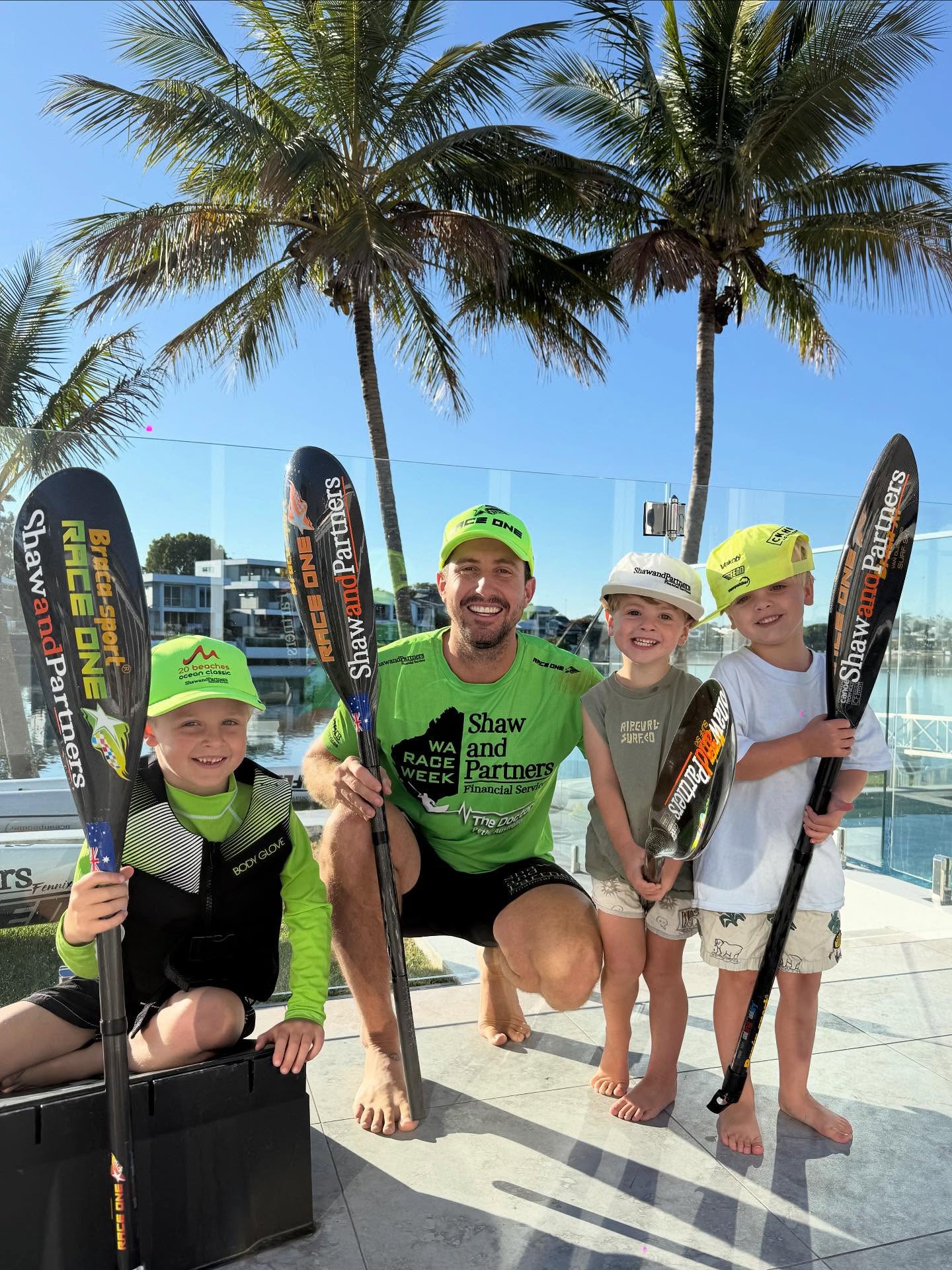
One month ago, Hill had come home from training and was helping to cook dinner for his three kids was he was struck by an intense bout of dizziness and spells of fainting.
He was rushed to hospital and, initially, doctors thought he was suffering the onset of a stroke.
However after spending the next three nights there, medical experts couldn’t determine what he had experienced. In fact, he still doesn’t have any clarity on what caused it.

“I was drug-tested tonight and they asked if I have given blood in the last few months. I said, ‘No, but I’ve had some taken when I was showing stroke-like behaviour.” He laughs.
“It was just four hours of weirdness. I still have no clear answers, which is strange.
“I was telling [wife] Llani before the race that I had no idea what would happen when I red-lined out there on the water.
“It was a scary time. Not just for me, but also for Llani. Now a month on, I’m thinking less about it. But that night, I remember wondering if I would still be able to do what I love and also run my business.”
“It put a lot of things into perspective for me, reflecting on what’s important and what’s not. Obviously everything was OK, but I wondered if it was something that was a lot more dire, what would I change?”

Despite that uncertainty, Hill remained steeled for the challenge at hand.
South Africa stood as the last frontier for him to conquer. Despite racing around the world for 15 years, Hill had never lined up in the spiritual home of surfski.
He was booked to do so back in 2013, but a foot infection meant he wasn’t cleared to board the plane.
“It’s crazy to think that the opportunity hasn’t presented itself since then,” he said.
“I’ve been to Mauritius three times, which is just across the water, but could never get here.”

It had been a somewhat unique campaign for Cory – and it certainly carried plenty of unknowns.
After racing the Molokai Challenge in May, he switched focus to the Sella, racing in a K2 for the first time with close friend and 2024 Olympic Games silver medallist, Riley Fitzsimmons.
View this post on Instagram
He had hit-outs at several domestic races over the last three months, but his motivation, as always, remained intrinsic.
“I felt ultra-focused and was clear on the job at hand,” he said. “What it meant to me, what it means to the family at home.
“Obviously it’s a tricky week for Llani looking after the three boys at home. I’m over here to show them what is possible if you put your mind to something. From there, it was head-down.”

Unlike previous World Championships, Hill gave himself a longer lead-in to adjust to South African conditions.
He spent time with the Fenn family, with whom he’s particularly close, and learned the course across which he’d be racing.
What he didn’t have to figure out, however, was his race plan.
Having now spent so long at the top, he admits he knew exactly what to expect once the starting gun fired on Sunday to begin the 34 kilometre course, boasting 515 competitors.
“You could ask anyone what I said I was going to do and compare it to what happened, and it was almost like I had predicted the future.” Cory laughed.
“We had a race in Australia called the Hells Gate 38, and it was bloody far. This was four kilometres shorter, but it was a World Championships.
“I thought to myself, ‘You have to be thereabouts in the first 20 kilometres, but you don’t have to be winning.’
“My goal was to get to the first buoy inside the top 20, and I was thereabouts. At the halfway point, I wanted to be inside the top five and be comfortable, and I was fifth.
“I knew that I was going to go wide from there. The coastline in the second half of the race reminded me so much of the West Coast Downwind [in Perth], but it was on the opposite side. Instead of the wind coming over the left shoulder, it came over the right. But it was the same sort of coastline that could catch you on a shallow line.
“At one stage I told the media boat to f*** off,” he laughs. “They were filming me when I made my break, but when I looked back over my shoulder I saw four people just sitting on the wash.
“I actually just dropped the paddle and went back to the group.”
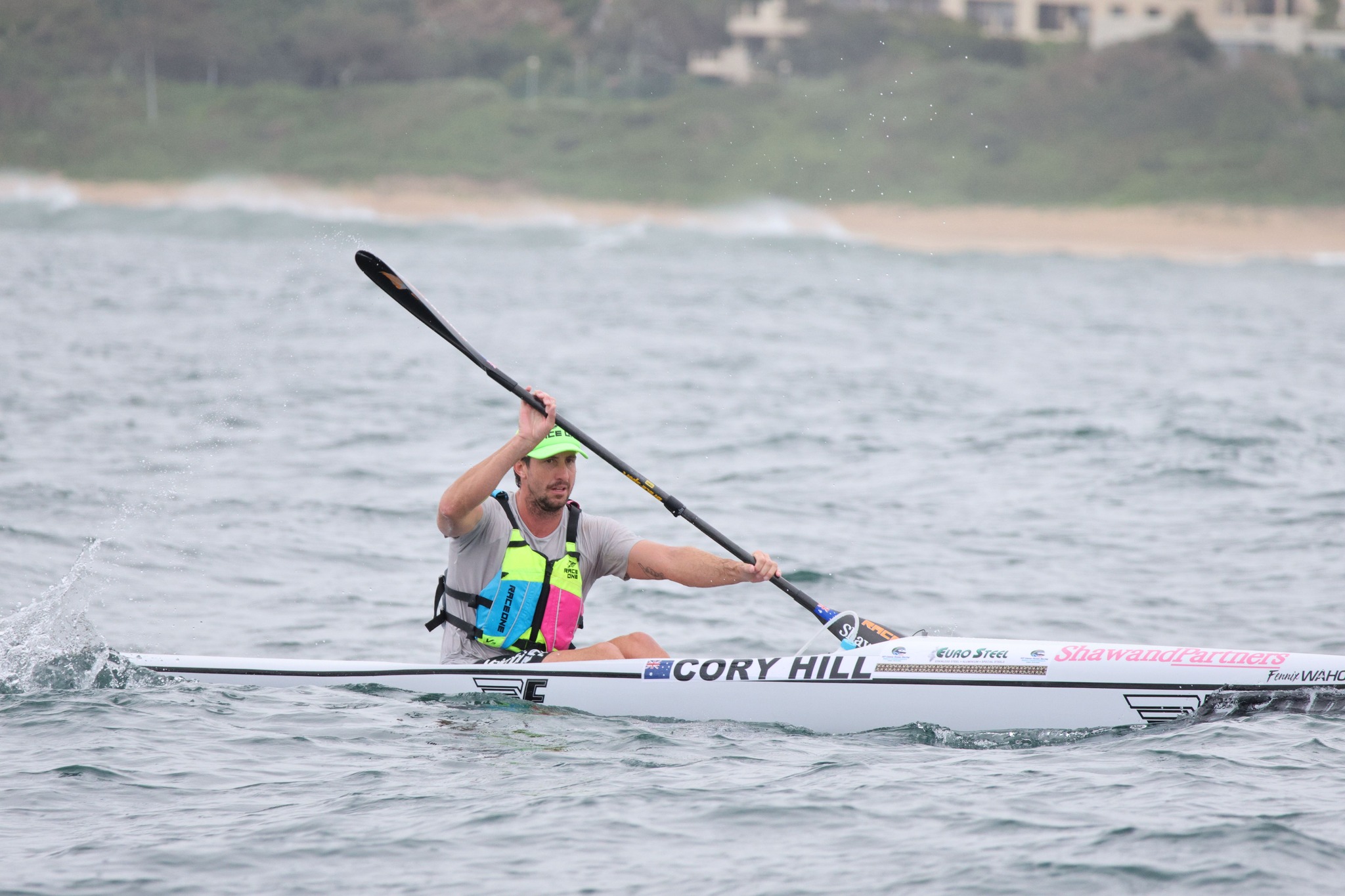
Hill admits that group held a few unexpected faces.
France’s Pierre Vilella and Portugal’s Bernardo Pereira were both having the most impressive performances of their blossoming, and promising, careers.
“I don’t mean this with any disrespect, but I was more worried about the people that I couldn’t see, rather than Pierre and Bernardo who I could see.” Hill said.
“Again, I don’t mean that with any disrespect, it just shows how impressive those two were. They actually led for the majority of that first half of the race.
“I thought that being a bit younger and not having as much experience leading big races, they were a chance of popping. It was so impressive to see them not just hang in there, but fight for the win. They were outstanding.
“The future of the sport is looking so promising. From an Australian point of view, it was so cool to take a big victory here in Durban. For the Europeans to do the same, it’s incredible.”
Reigning champion Gordan Harbrecht and 2021 champion, South Africa’s Nick Notten, were on a shallower line to Hill and the pair of young Europeans.
The five were also fighting one of the all-time legends of the sport in Dawid Mocke.
“Dawid was in the mix there and I actually used the advice he gave me 10 years ago, when he told me, ‘If you don’t miss a run, you probably won’t lose the race.’”
“I reminded myself of how many times I had been here before and backed myself to catch every run. I stopped racing the others and started racing myself.”

And with that, the World Championship was won.
Cory Hill navigating the testing Westbrook Beach shorebreak, walking up the beach, stopping for a quick interview and crossing the line in a time of 2 hours, 5 minutes and 22 seconds to claim his fourth ICF crown.
Pierre Vilella was 43 seconds behind (2:06:05) to collect silver in the biggest result of his paddling career.
“I’m very happy to get this medal.” Vilella said.
“It’s maybe the best race I’ve ever had. It was good conditions across the whole course… it’s very cool.”
Bernardo Pereira (2:06:15) earned bronze, along with the Under 23 title. He is the first male athlete to win an overall medal while still being in a junior age category.
“This medal gives me a feeling of gratitude for the work we’ve done as a team.” Perreira said.
“I look forward to being able to defend my title next year, but right now, I am just feeling happy for this medal and the result.”
Nick Notten (2:06:26) was fourth, and the first South African home, while Gordan Harbrecht (2:06:38) bagged another top five finish.
It’s the first World Championships where a South African hasn’t stood on the men’s top three podium.
They did celebrate in the women’s race, however, with Kira Bester claiming back-to-back victories in a story of inspiration for the ages. You’ll be able to read that in-depth conversation with Kira in the coming days.
To view the full results of the 2025 ICF Ocean Racing World Championships, click here.

“Yeah, it feels great to be a four-time World Champion.” Hill reflected. “But I really do just enjoy racing.”
“I generally line up at five or six major races each year. When you look at a career of around 10 years, you realise that you don’t actually get that many chances to take everybody on.”
“For me, it’s less about the titles and more about the consistency I’ve been able to produce over that time. I’m actually happier that this is my seventh medal from eight World Championship campaigns.
“Consistency is what I’m aiming for, and for now, it’s what I’m achieving.”

As a senior figure in the sport, Hill holds a sense of pride in seeing Europe produce its most impressive World Championships to date.
“10 years ago if you said I’d be beaten by a European, I’d ask who? Today there were three inside the top five of a race held in South Africa.
“Bernardo told me that he’s still Under 23’s next year, and that’s scary.”
And he begrudgingly admits there is a sense of satisfaction that comes from winning in South Africa.
“A lot of people had said, ‘You have to come over here and prove yourself on our soil.’ I’m stoked to achieve that.”
“I’m interested to see where people say I have to win next.” He laughs.

Those wins, no doubt, will keep coming.
Despite being in uncharted waters, Hill is as determined as ever.
“Yes, I am.” He said. “I just enjoy downwind paddling, I really do.
“Today when I was able to get away, it felt like less of a race and more of a self-pursuit.
“I said to Llani that it felt like an artform, in a way. I’m the least creative person in the world… I can barely draw a bloody snake.”
“But this challenge of going as fast as possible while using as little energy as possible… that’s what I’m trying to perfect.
“In my mind, I’ve been more successful than I thought I’d ever be. I said two or three years ago that if I was to never win another title, it would be OK.
“If you told me years ago that I’d win one Doctor, or one Molokai, or one World Championship or Dragon Run, I’d be able to retire happy.
“I don’t need to win more to keep going… I just enjoy doing this. I’m passionate about downwind paddling and I love challenging myself.”